When Should I Start Lawn Care in Chicago? A Complete Homeowner’s Guide
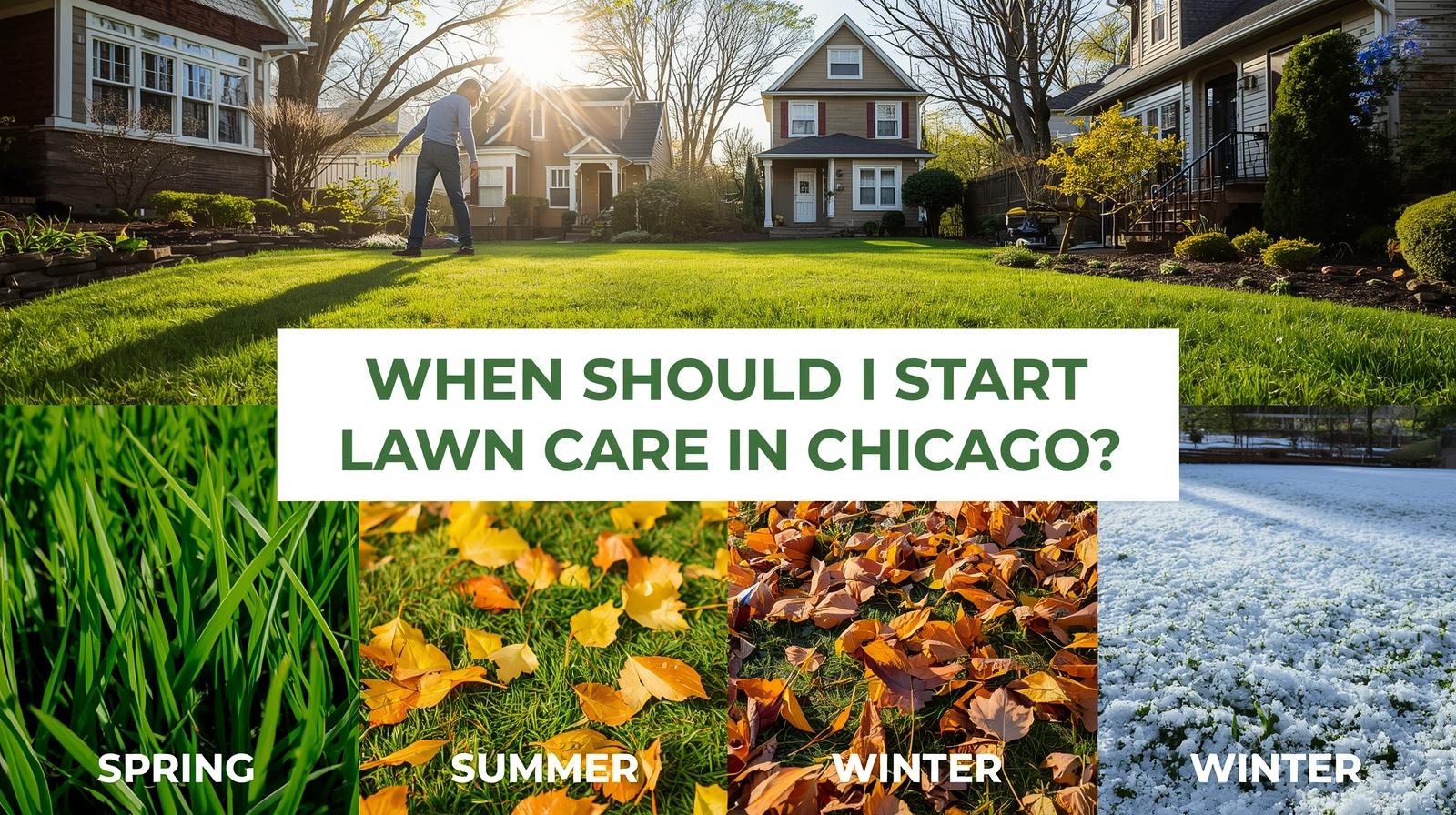
Chicago lawns are some of the toughest in the country.
They battle freezing winters, soggy springs, scorching summers, and unpredictable fall weather.
So homeowners often ask the same question every year:
“When should I start lawn care in Chicago?”
The answer isn’t a date.
It’s a sequence.
A rhythm dictated by temperature, soil conditions, and how cool-season grasses behave.
This guide teaches you exactly when to begin each task so your lawn thrives from spring through fall.
No sales pitch.
Just clear, practical teaching you can use immediately.
🌤️ Why Timing Matters More in Chicago Than You Think
Chicago sits in USDA Hardiness Zone 5b–6a.
This means long winters, late thaws, and frequent surprise frosts.
Chicago lawns are mostly cool-season grasses, especially:
- Kentucky bluegrass
- Fine fescue
- Perennial ryegrass
- These grasses grow best in soil between 50–65°F, not air temperature.
When you start too early:
- soil is still frozen
- roots can’t absorb nutrients
- seed won’t germinate
- weeds get a head start
When you start too late:
- crabgrass wins
- spring growth window shrinks
- lawns thin and stress through summer heat
- So the real key is watching soil temperature, not the calendar.
🌱 When to Begin Spring Lawn Care in Chicago
Spring is when Chicago lawns wake up, but they do so slowly.
You shouldn’t rush.
Most early-spring lawn damage happens because people try to “fix” the lawn while the soil is still mushy or frozen.
Here’s the right sequence.
🧊 Early Spring (Late March – Early April)
Task: Wait until the soil firms up.
In most Chicago years, the lawn is too soft to walk on until late March or early April.
If footprints leave deep marks, stay off the lawn.
Walking on soft soil compacts it and leads to summer patchiness.
Tasks to Start Now
Light debris cleanup
First edge trimming
Inspect the lawn for snow mold
Rake gently to fluff up matted grass
Nothing aggressive yet.
Your goal is simply to help the lawn “breathe.”
🌼 Mid Spring (Mid–Late April)
Soil temperature target: 50–55°F
Now the lawn begins waking up.
Start these tasks:
First mowing (when grass reaches 3–3.5 inches)
Spring fertilization (light, slow-release)
Pre-emergent weed control (crabgrass prevention)
Pre-emergent is time sensitive.
Apply just before soil hits 55°F for several days in a row.
In most years, this means late April.
Missing this window is why crabgrass shows up all summer for many homeowners.
🌾 Late Spring (May)
This is Chicago’s strongest natural growth period.
You can safely start:
Overseeding thin patches
Applying soil amendments
Adding compost topdressing
Aeration (only if fall aeration wasn’t done)
Overseeding in May is fine as long as temperatures stay in the 60s.
But once June heat arrives, seed struggles.
🌞 When to Start Summer Lawn Care in Chicago
Chicago summers are unpredictable.
Some years are cool and rainy.
Others bring long 90°F stretches that stress cool-season grass deeply.
So summer lawn care is mostly about maintenance and protection, not major renovations.
✂️ Early Summer (June)
Start these tasks:
Raise mowing height to 3.5–4 inches
Apply a slow-release summer fertilizer
Spot-treat weeds (avoid heavy spraying)
Adjust watering schedule
Watering rule for Chicago summers:
1–1.5 inches per week
Water deeply, not daily.
🔥 Mid–Late Summer (July–August)
This is the lawn’s stress season.
What to do:
Avoid aeration
Avoid overseeding
Avoid heavy fertilization
Water consistently
Keep mower blades sharp
If the lawn goes dormant (brown), that’s normal.
Cool-season grass shuts down to survive heat.
The lawn will recover in fall as long as you don’t scalp it or over-water it.
🍂When to Start Fall Lawn Care in Chicago

Fall is the single most important season for Chicago lawns.
Why?
Because cool-season grasses grow most aggressively in cooler temperatures.
Fall is when your lawn:
repairs summer damage
thickens
stores energy for winter
develops deeper roots
If you only invest effort in one season, choose fall.
🍁 Early Fall (September)
Soil temperature target: 60–70°F
This is the perfect start for:
Overseeding
Core aeration
Heavy fertilization
Dethatching
Seed germinates beautifully in September because soil is warm and air is cool.
And you won’t fight with weeds like you do in spring.
🌾 Mid Fall (October)
Grass grows strong and thick during this time.
Continue:
Overseeding late patches
Feeding the lawn
Mulching leaves instead of removing them
Mulched leaves decompose into free organic matter.
❄️ Late Fall (November)
Apply your winterizer fertilizer
This is one of the most misunderstood tasks.
Winterizer isn’t for winter growth.
It helps store sugars in the roots so your lawn explodes back to life in spring.
Apply when the grass stops growing but is still green.
For most Chicago seasons, that’s early–mid November.
❄️ When to Start Lawn Care After Winter
Chicago lawns often look rough after winter.
But the trick is to avoid doing too much, too fast.
Here’s what to start once the snow melts.
🧊 Post-Winter Tasks:
Light raking
Checking for snow mold
Trimming winter-damaged edges
Cleaning debris
Do not fertilize yet.
Do not aerate yet.
Do not overseed yet.
Wait for soil warmth.
🧪 Science Behind Chicago Timing: Why Soil Temperature Matters
Air temperature changes fast.
Soil temperature changes slowly.
Seed, fertilizer, and weed control all respond to soil temperature — not air.
Here’s your cheat sheet:
Lawn Task Soil Temp Needed Typical Chicago Date
First Spring Mow 45–50°F Early/Mid April
Pre-Emergent 50–55°F Late April
Overseeding 55–70°F May or September
Aeration 60–70°F September
Summer Fertilizer 65–75°F June
Fall Fertilizer 55–65°F October
Winterizer <50°F (but not frozen) November
If you want the most accurate timing every year, the best resource is:
Illinois State Water Survey – Soil Temperature Map
It updates daily.
🧰 Section 5: Step-by-Step Annual Calendar You Can Follow
This is the simplest way to know exactly when to start any Chicago lawn care task.
🌼 Spring (April–May)
Cleanup
First mow
Crabgrass prevention
Light fertilization
Overseeding thin areas
Soil fixes
🌞 Summer (June–August)
High mowing
Regular watering
Slow-release fertilizer
Spot weed treatments
No seeding or aeration
🍁 Fall (September–November)
Aeration
Overseeding
Heavy fertilizer
Leaf mulching
Winterizer in November
❄️ Winter (December–March)
Don’t walk on frozen grass
Don’t shovel salt onto the lawn
Plan next year’s schedule
🧠 Section 6: Questions Homeowners Ask Every Spring
1. “Is March too early to start?”
Yes.
Soil is too cold.
2. “Should I fertilize in March or April?”
No.
Wait until late April or early May.
3. “When do I put crabgrass preventer down?”
Late April before soil hits 55°F.
4. “Can I overseed in spring?”
Yes — but fall results are much better.
5. “Should I aerate in spring?”
Not unless necessary.
Fall is ideal.
🌿 Final Thoughts: Start Your Lawn Care When Your Lawn Is Ready — Not Your Calendar
Chicago weather is unpredictable.
A warm March can be followed by a late snowstorm.
A cool May can delay germination.
That’s why the smartest lawn owners don’t rely on dates.
They rely on soil temperature, seasonal patterns, and grass biology.
If you follow the steps in this guide, you’ll always know:
- when to start
- what to do
- what to avoid
- how to keep your lawn green from spring through fall
When you work with Chicago’s climate instead of against it, your lawn will reward you.